














How To Teach A Dog To Sit

‘Sit’ is one of the most useful cues you can teach your dog and a perfect cue to start training with! Not only is it a strong foundation for future training, but it also helps to keep your dog out of trouble when you’re out and about. So what’s the best way to go about teaching your pup? Our experts have put together a few puppy training tips to guide you through the process!
The Benefits Of Teaching A Puppy To Sit
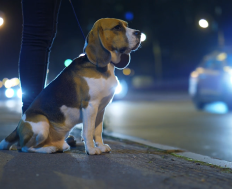
One of the biggest benefits of training a puppy to sit on cue is being able to keep them safe during walks. For example, it can be helpful for sitting and waiting when crossing the road, or to prevent your dog from jumping up when greeting someone. There can be a few unexpected bonuses, too. Dogs may start to ‘sit’ to request things such as throwing a ball, or even letting them outside into the garden. This can be a much more polite way of requesting things than barking or pawing!
Dog Training Tips Before Getting Started
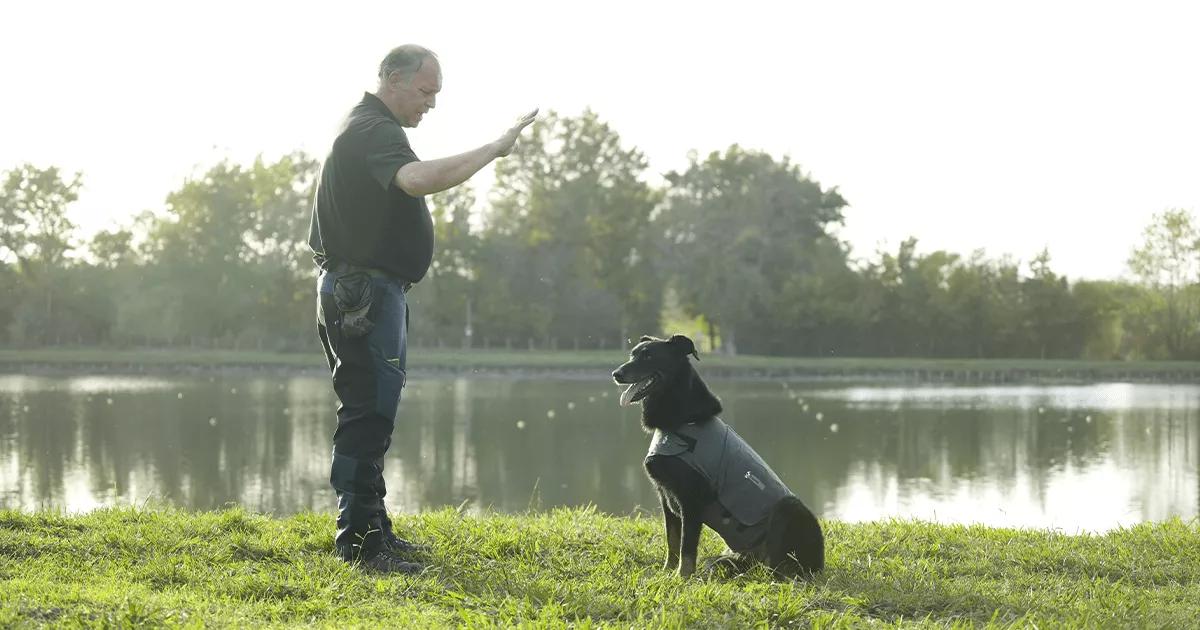
Before getting your puppy training underway, remember that it’s always best to use reward-based training. As well as preventing your dog from becoming nervous or anxious, this will encourage them to repeat the sitting action as they’ll begin to link it with positive results. Treats can be useful, but a reward could also take the form of praise, a stroke, or playing with a toy – anything that makes your dog happy!
With that out of the way, let’s get started on how to train a dog to sit!
How To Teach A Puppy To Sit:
1. Start With A Treat Held Near The Nose
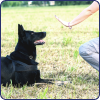
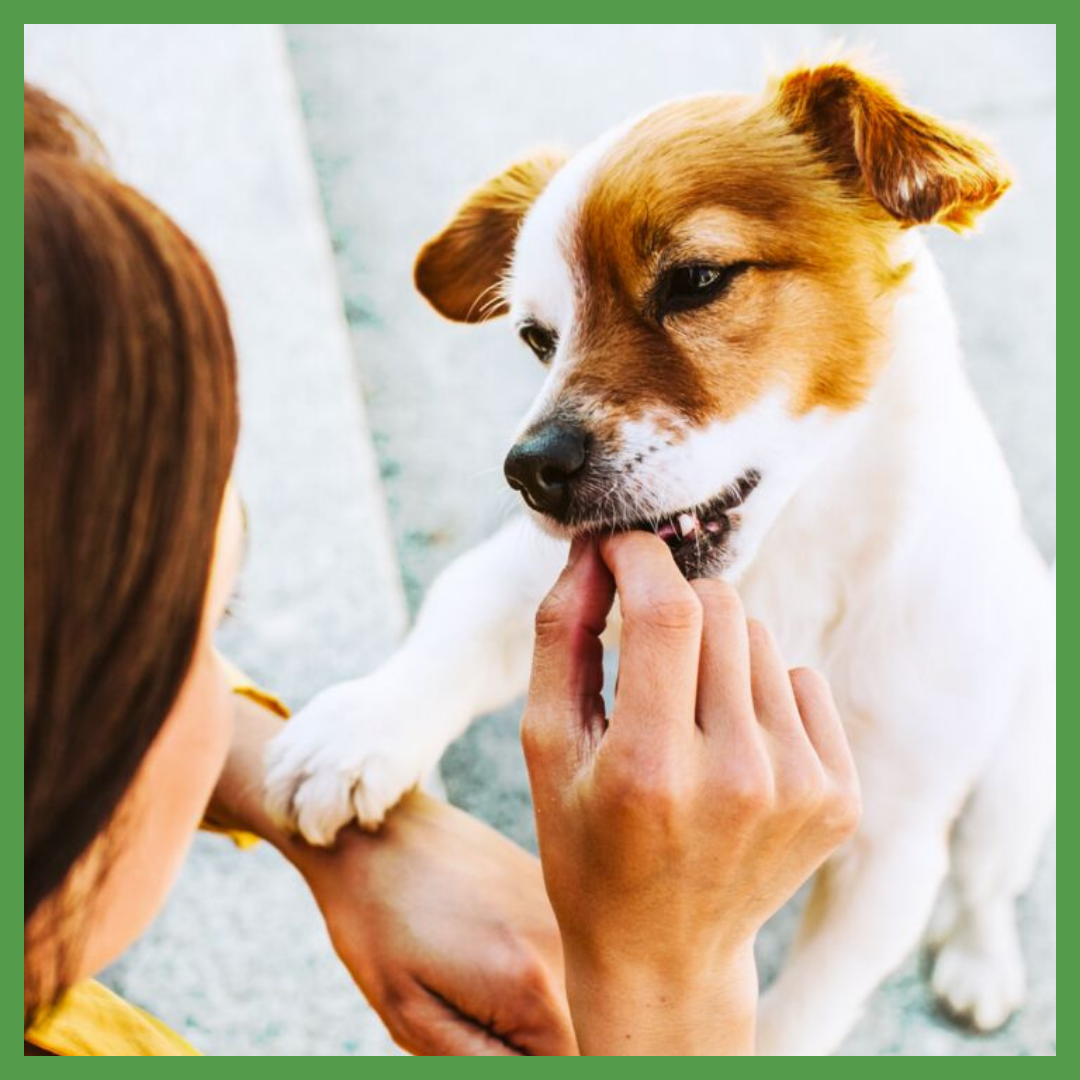
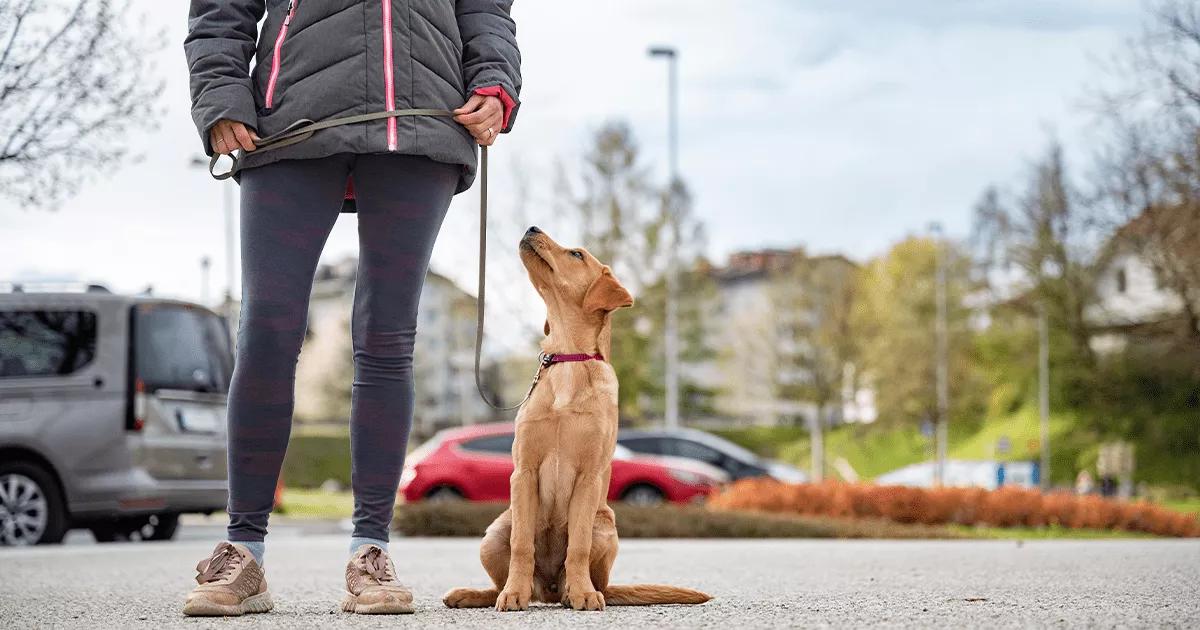
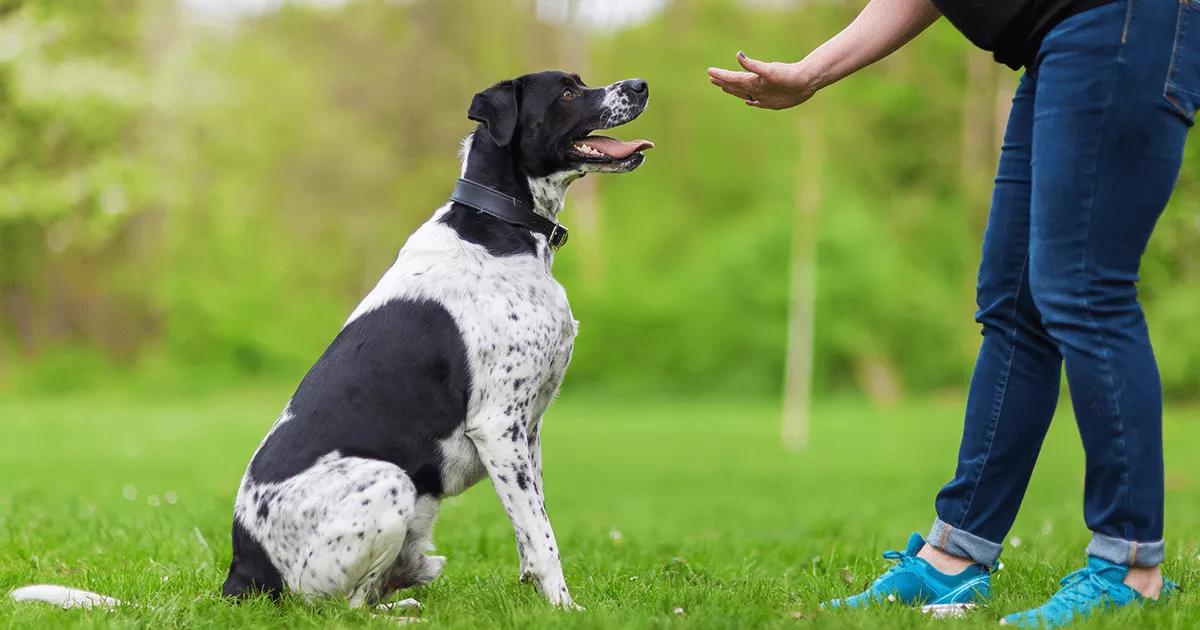
Begin with a treat held near your pup’s nose, and then move the treat up and back over their head. This movement will encourage your dog to look up and move their rear end downwards – straight into the ‘sit’ position! As soon as they’re sitting, give them the treat and some verbal praise to mark the desired action.
2. Repeat The Process
Repeat this first step until your puppy is moving easily into the ‘sit’ position by following a treat. To get your dog to stand up again between each attempt, you can try walking away or throwing a treat a little distance away, as this will encourage them to move.
3. Move To Holding The Treat In The Other Hand
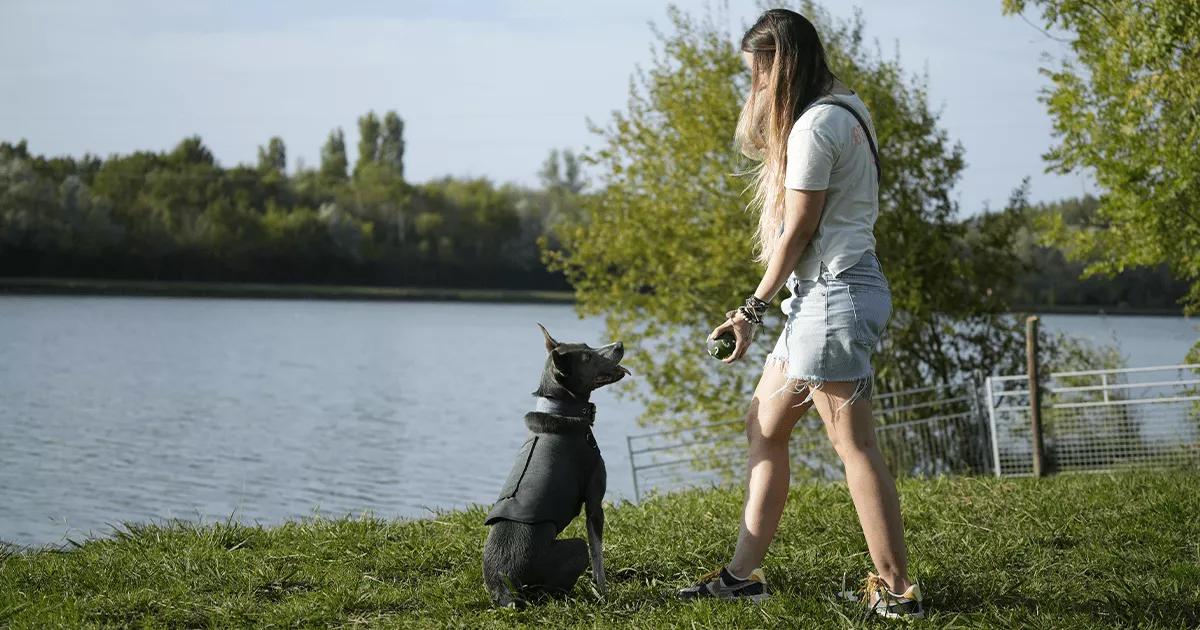
The next puppy training tip is to continue using the original hand in the same motion but to present the treat from your other hand. This teaches your dog to follow your hand, rather than the treat. And just like that, your puppy is now following a visual signal!
4. Introduce The Cue Word
Once your dog can respond quickly and reliably to your hand signal, it’s time to introduce the cue word: ‘sit’. Say this word before using the hand signal, and praise and reward your dog when they sit. If they don’t manage to sit, simply go back to the previous step.
5. Remove The Hand Signal
Now’s the time to stop using your hands altogether. Say the cue and wait to see if your puppy has made the association with the word and the action of sitting. If they haven’t, you can try using a smaller version of your hand signal before moving back a step. Again, make sure to reward your dog when they sit successfully!
6. Test Out Your Cue In Different Environments
The final puppy training tip for how to teach a dog to sit is to apply what you’ve both learnt in different scenarios. To begin with, this can be as simple as going to another room, before eventually building up to sitting when out on a walk. Remember to keep using rewards while adding distractions into your pup’s training as it can be hard for them to concentrate with other things happening around them. You can then start to reduce how often you offer a reward.
And that’s it! Follow these dog training tips and your puppy will be sitting on cue in no time. Just make sure to celebrate with them too!
Further Dog Training Tips For Teaching A Puppy To Sit
If your puppy doesn’t take to their training immediately, don’t be disheartened. Some dogs simply take a little longer than others or else need a bit of extra support. Here are a few more tips for teaching a puppy to sit:
- Don’t be tempted to use your hand to force your dog into a sitting position. This can be intimidating for your dog and may make them uncomfortable. Instead, just go back a step in their training and reinforce the previous level.
- If your puppy is struggling to sit from a standing position, try from a ‘down’ position instead. This is a very similar process, only you’re using the treat to lure them up into a sitting position.
- If your dog is jumping for the treat during training, check where the treat is positioned. It could be that it’s being held too high, which is encouraging them to move up to get to it. Instead, keep your hand closer to their nose and move it up and backwards towards their forehead.
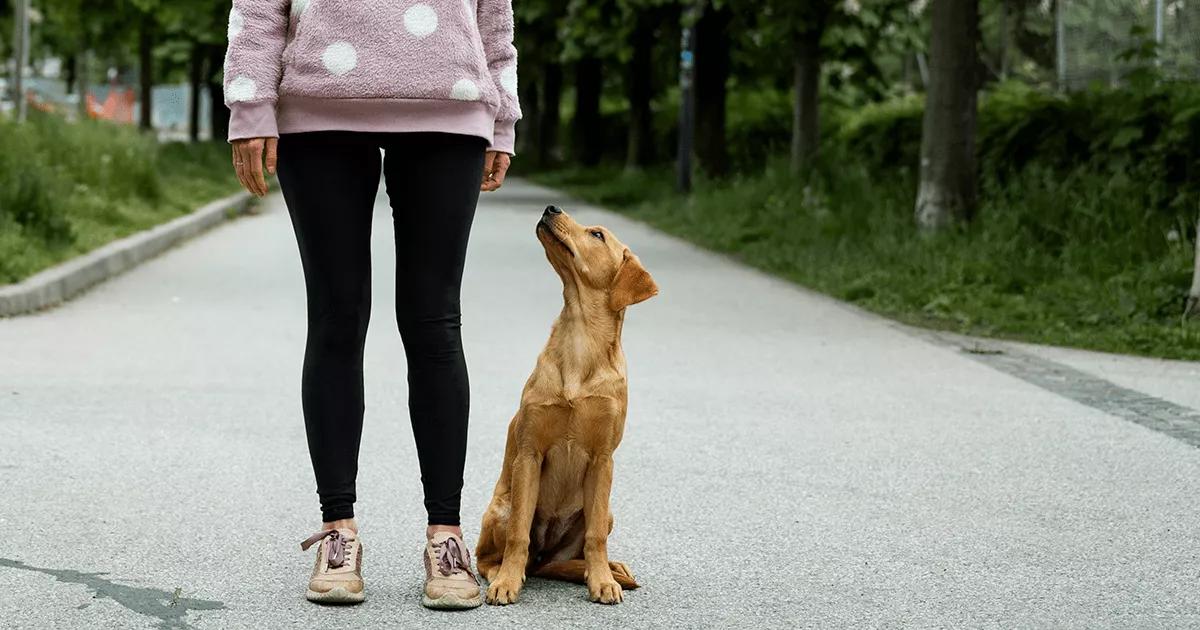
- If your dog is retreating backwards as you move the treat, try moving it in a slower motion as you lure them down.
- If your dog doesn’t appear to be interested in the treat, try something else! Find a treat they love, such as a tasty piece of sausage.
- Keep your cue words short and be consistent when using them. For example, it can be confusing for a dog if you use ‘sit down’ and ‘down’ as two separate cues for different actions. Instead, ‘sit down’ can be shortened simply to ‘sit’.
- Reward a ‘sit’ whenever it happens, even if it’s not when you’ve given your pup a cue. This way, your puppy is more likely to offer to sit to earn a treat. Even better, try using your verbal cue just before they sit to further reinforce the association. This is particularly helpful for bouncy pups!
Always remember, if there is any change in how your dog sits, or how readily they will offer to sit, you should speak to a vet. There may be a reason for this change such as sore joints or discomfort. If sitting is uncomfortable, a ‘down’ position may be more appropriate – though you should also consider the surface you are asking your dog to sit or lie down on.
General Puppy Training Tips
While everything we’ve said above is useful for teaching a puppy to sit, we have some bonus advice that can be handy for all aspects of dog training:
- Train when your dog is feeling relaxed – not when they’re tired or hungry!
- Train in a quiet environment with minimal distractions, especially when starting out on a new cue.
- Use short but frequent sessions, rather than one longer session a day. 15 to 20 minutes is usually enough.
- Stop a session if your dog becomes tired or distracted.
- Don’t punish your dog if they’re not learning as fast as you want them to. Be patient and consider the environment, as well as the clarity of your training. If they’re really struggling, find a local accredited dog trainer and check out the lessons they offer.
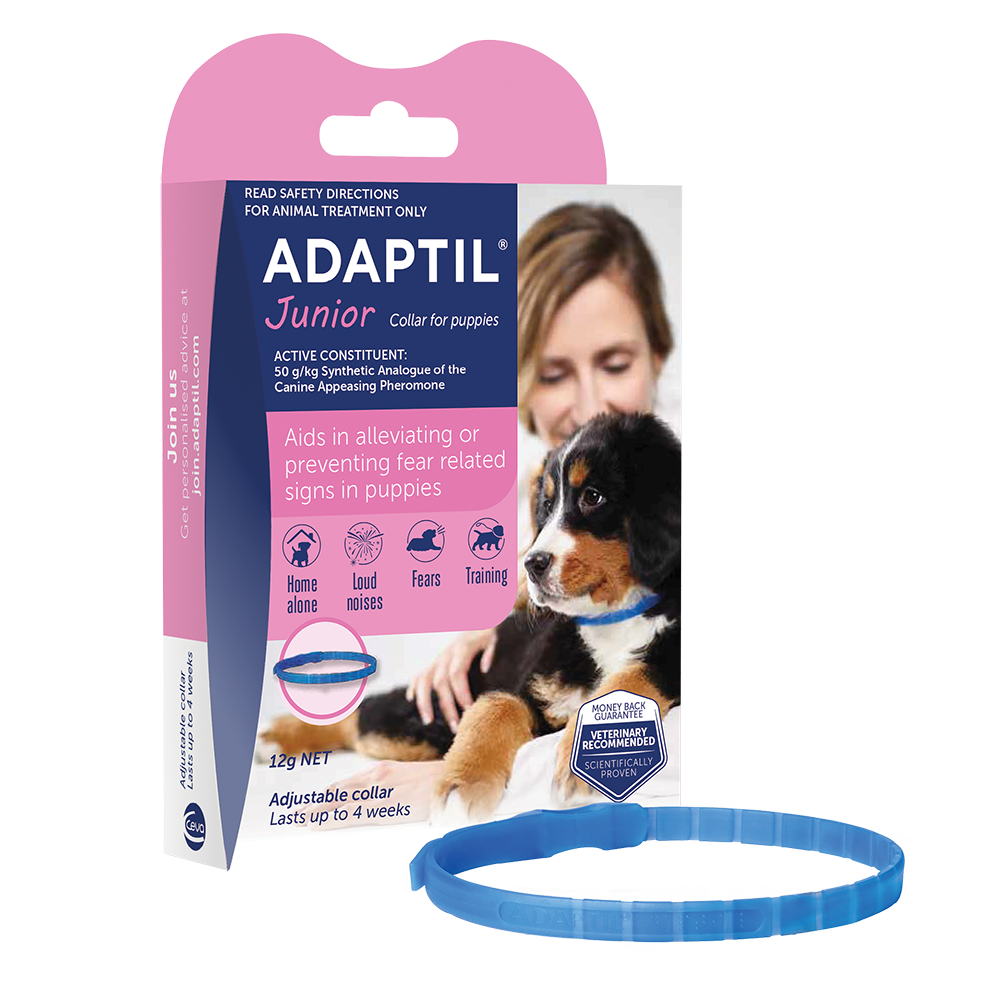
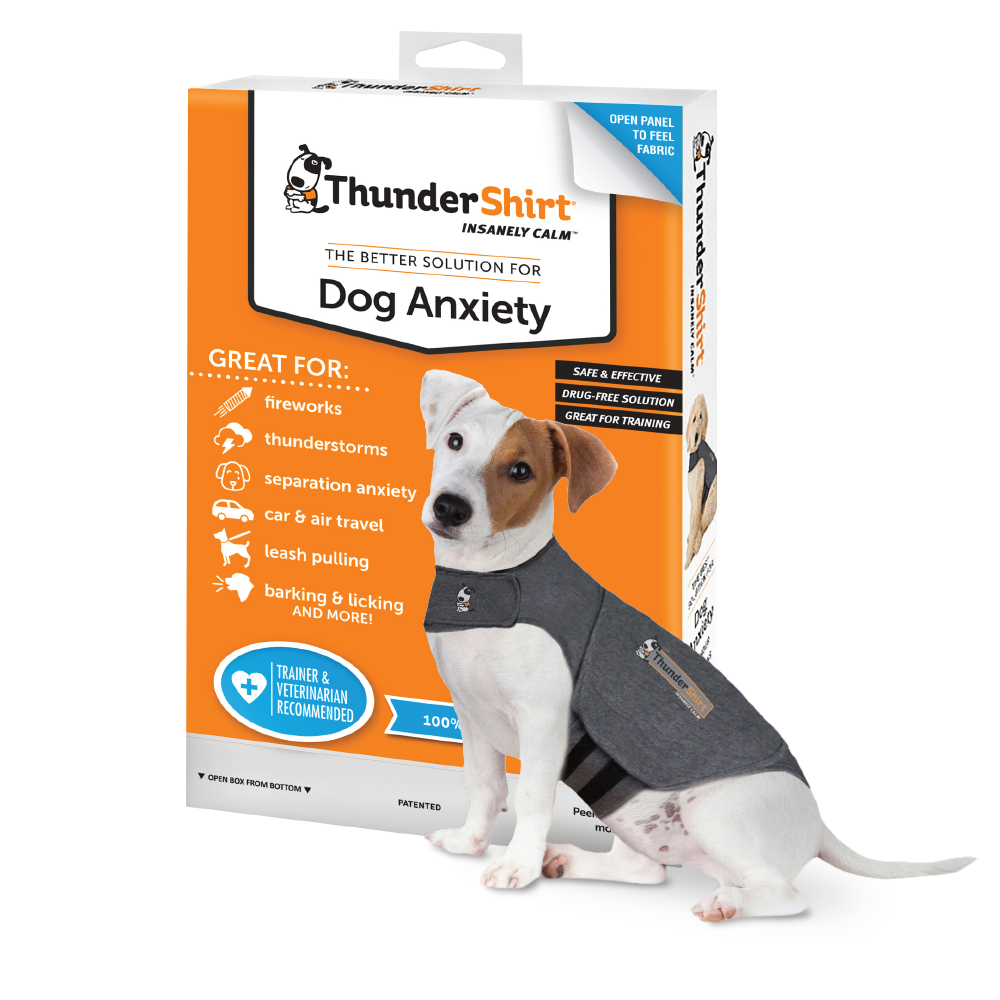
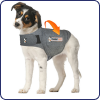
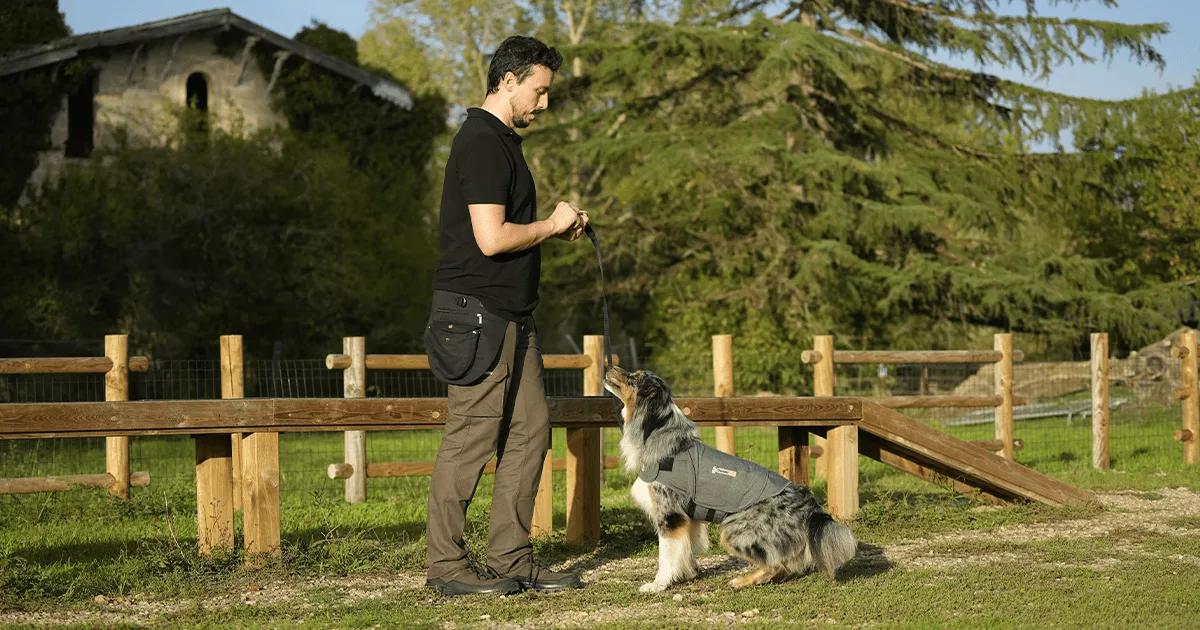
- Make the most of ThunderShirt or an ADAPTIL collar! These can be great during training sessions at helping your dog to focus on the training at hand, rather than being distracted with what’s going on around them.